Understanding Transmission Systems: A Comprehensive Guide to Automatic, Manual, and Continuously Variable Transmissions
The transmission is one of the most critical components of any vehicle, yet many drivers have only a vague understanding of how it works or why it matters. The transmission's primary function is to transfer power from the engine to the wheels while allowing the engine to operate at its optimal speed regardless of vehicle speed. This seemingly simple task requires sophisticated mechanical and electronic systems that have evolved dramatically over the past century. Understanding transmission technology provides valuable insight into vehicle performance, fuel efficiency, and the driving experience. This comprehensive guide explores how transmissions work, the different types of transmissions available in modern vehicles, and the advantages and disadvantages of each type.
The fundamental challenge that transmissions solve is the mismatch between engine operating characteristics and driving requirements. Engines produce maximum power and torque within a relatively narrow range of speeds, typically between two thousand and six thousand revolutions per minute. However, vehicles must operate across a much wider range of speeds, from a complete stop to highway speeds exceeding seventy miles per hour. If the engine were directly connected to the wheels without a transmission, the vehicle would either be unable to accelerate from a standstill or would be limited to very low top speeds. The transmission solves this problem by using a system of gears that can change the ratio between engine speed and wheel speed, allowing the engine to operate at optimal speeds while the vehicle travels at any desired speed.
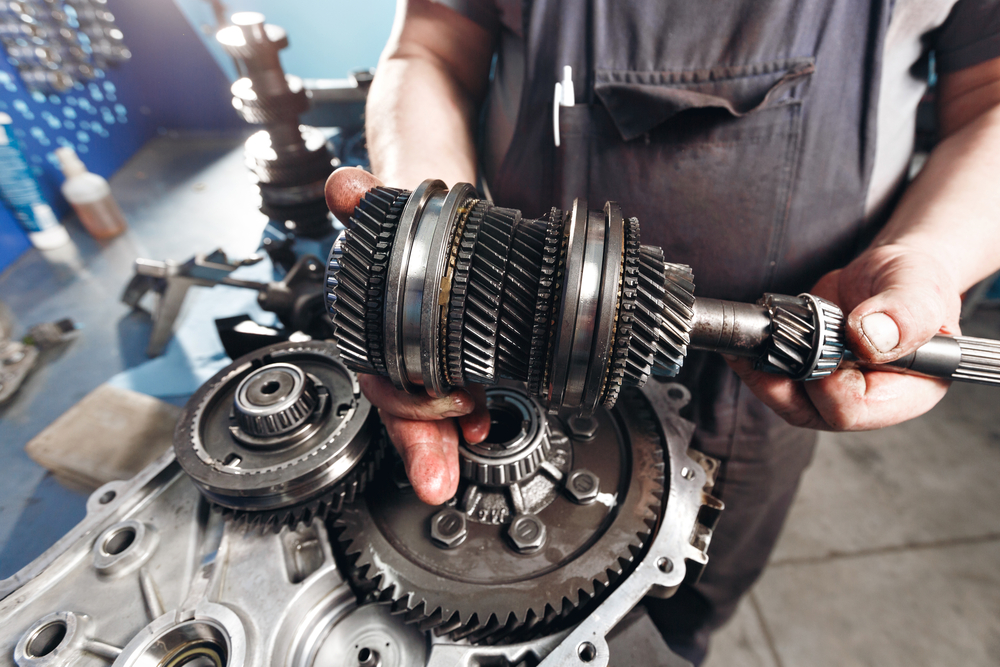
Manual transmissions represent the oldest and most mechanically straightforward type of transmission. In a manual transmission, the driver uses a clutch pedal to disconnect the engine from the transmission, then uses a gear shift lever to select the desired gear ratio. When the driver releases the clutch pedal, the engine reconnects to the transmission at the selected gear ratio. Manual transmissions typically offer three to six forward gears plus reverse. Lower gears provide higher torque multiplication, allowing the vehicle to accelerate quickly from a standstill, while higher gears allow efficient cruising at highway speeds. The driver must manually shift gears as driving conditions change, selecting lower gears for acceleration or climbing hills, and higher gears for efficient highway cruising.
Manual transmissions offer several advantages that have kept them popular despite the rise of automatic transmissions. They are mechanically simpler than automatic transmissions, resulting in lower manufacturing costs and potentially greater reliability. Manual transmissions are also more efficient, with less power loss between the engine and wheels compared to automatic transmissions. Many driving enthusiasts prefer manual transmissions because they provide more direct control over vehicle operation and a more engaging driving experience. Manual transmissions also tend to be lighter and more compact than automatic transmissions, which can be advantageous in performance vehicles where weight reduction is important.
However, manual transmissions also have significant disadvantages. They require more driver skill and attention, particularly in stop-and-go traffic where constant gear shifting is necessary. The learning curve for new drivers can be steep, and improper clutch operation can damage the transmission or cause jerky acceleration. Manual transmissions are less convenient than automatic transmissions, particularly in heavy traffic. In many countries, manual transmissions have become increasingly rare as automatic transmissions have improved and become more affordable. In the United States, less than three percent of new vehicles sold have manual transmissions, though they remain more common in other parts of the world.
Automatic transmissions eliminate the need for manual gear shifting by using a fluid coupling and planetary gearset system to automatically select the appropriate gear ratio based on vehicle speed and engine load. The fluid coupling, also called a torque converter, uses pressurized transmission fluid to transfer power from the engine to the transmission. Unlike a mechanical clutch, the torque converter allows some slippage, which provides a smooth engagement and helps protect the transmission from shock loads. The planetary gearset consists of multiple sets of gears that can be engaged in different combinations to produce different gear ratios. A hydraulic control system automatically selects which gears are engaged based on vehicle speed, throttle position, and other factors.
Automatic transmissions offer significant advantages over manual transmissions. They eliminate the need for the driver to shift gears, making driving much easier and less fatiguing, particularly in stop-and-go traffic. Automatic transmissions provide smoother acceleration and more refined driving experience compared to manual transmissions. They are also safer in some respects, as drivers can focus more attention on the road rather than gear selection. Automatic transmissions are particularly well-suited to vehicles designed for comfort and convenience, such as luxury cars and family sedans.
However, automatic transmissions also have disadvantages. They are more complex and expensive to manufacture than manual transmissions. Automatic transmissions have historically been less efficient than manual transmissions, with greater power loss through the torque converter and hydraulic systems. This efficiency penalty has resulted in lower fuel economy compared to equivalent manual transmission vehicles. Automatic transmissions are also heavier and larger than manual transmissions, which can impact vehicle weight and packaging. Maintenance and repair of automatic transmissions is more complex and expensive than manual transmission maintenance.
Continuously variable transmissions, commonly abbreviated as CVTs, represent a different approach to the transmission problem. Rather than using fixed gear ratios like traditional automatic or manual transmissions, CVTs use a system of pulleys and belts or chains to provide an infinite number of gear ratios between the minimum and maximum values. As driving conditions change, the CVT continuously adjusts the pulley sizes to maintain the engine at its optimal operating speed while the vehicle accelerates or decelerates. This continuous adjustment eliminates the discrete gear shifts that occur in traditional transmissions.
Continuously variable transmissions offer several advantages. Because the engine can always operate at its optimal speed, CVTs can provide superior fuel efficiency compared to traditional automatic transmissions. They also provide smooth acceleration without the distinct gear shifts of traditional transmissions. CVTs are lighter and more compact than traditional automatic transmissions, which is advantageous for fuel economy and vehicle packaging. Many modern CVTs have been refined to provide acceptable driving characteristics and reliability.
However, CVTs also have disadvantages and limitations. Some drivers find the driving experience of a CVT unpleasant, as the engine speed increases to a peak value and then remains relatively constant during acceleration, creating an unusual engine sound and feel. CVTs have historically had reliability concerns, though modern CVTs have become more dependable. CVTs are generally not suitable for high-performance vehicles or vehicles designed for towing, as they cannot handle the high torque loads of performance engines or the stress of towing heavy loads. Some CVTs have been known to develop problems after relatively low mileage, though this has become less common in recent years.
Dual-clutch transmissions represent another modern transmission technology that combines elements of manual and automatic transmissions. Dual-clutch transmissions use two separate clutches, one for odd-numbered gears and one for even-numbered gears. While one gear is engaged, the transmission can pre-select the next gear on the other clutch, allowing nearly instantaneous gear changes. When the driver accelerates or decelerates, the transmission simply disengages the current clutch and engages the pre-selected gear on the other clutch. This technology allows extremely fast gear changes with minimal interruption in power delivery.
Dual-clutch transmissions offer significant performance advantages. They can provide gear changes faster than any driver could achieve with a manual transmission, and faster than traditional automatic transmissions. They also provide better fuel efficiency than traditional automatic transmissions because they eliminate the power loss of a torque converter. Dual-clutch transmissions are particularly well-suited to performance vehicles where quick acceleration and responsive handling are important. Many high-performance sports cars and luxury vehicles use dual-clutch transmissions.
However, dual-clutch transmissions also have disadvantages. They are more complex and expensive than traditional automatic transmissions. They can be jerky during low-speed driving in stop-and-go traffic, as the transmission struggles to find the optimal gear ratio for these conditions. Dual-clutch transmissions have also had reliability concerns in some applications, though newer designs have addressed many of these issues. Maintenance and repair of dual-clutch transmissions requires specialized knowledge and equipment, making service more expensive than traditional automatic transmission service.
Transmission fluid plays a critical role in automatic transmission operation and longevity. Transmission fluid serves multiple functions: it transmits power through the torque converter, lubricates moving parts, removes heat, and provides hydraulic pressure for the control systems. Modern transmission fluids are highly engineered products that must meet strict specifications. Using the correct transmission fluid is essential for proper transmission operation and longevity. Many modern vehicles have "lifetime" transmission fluid that does not require changes, though some manufacturers recommend fluid changes at specific intervals. Transmission fluid that becomes contaminated or degraded can cause transmission problems and eventual failure.
Transmission maintenance is essential for long-term reliability. Regular transmission fluid checks and changes, when recommended by the manufacturer, help prevent transmission problems. Driving habits also significantly impact transmission longevity. Aggressive acceleration, towing heavy loads, and driving in stop-and-go traffic all place stress on the transmission. Allowing the transmission to warm up before driving hard, avoiding sudden acceleration, and maintaining proper transmission fluid levels all contribute to transmission longevity. When transmission problems develop, prompt diagnosis and repair are important to prevent minor problems from developing into major failures.
The future of transmission technology is rapidly evolving. As vehicles become increasingly electrified, traditional transmissions may become less important. Many electric vehicles use a single-speed transmission because electric motors provide maximum torque across a wide range of speeds, eliminating the need for multiple gears. However, for traditional internal combustion engines and hybrid vehicles, transmission technology will continue to evolve. Manufacturers are developing more efficient automatic transmissions with additional gears to improve fuel economy. Dual-clutch transmissions continue to be refined for better low-speed driving characteristics and improved reliability. CVT technology is also being improved to provide better driving characteristics and greater reliability.
In conclusion, the transmission is a sophisticated system that plays a critical role in vehicle performance, efficiency, and driving experience. Understanding how different transmission types work provides valuable insight into vehicle operation and helps drivers make informed decisions when purchasing vehicles. Whether you prefer the engagement of a manual transmission, the convenience of an automatic transmission, the efficiency of a CVT, or the performance of a dual-clutch transmission, each technology has distinct advantages and disadvantages. As transmission technology continues to evolve, future vehicles will likely offer even better combinations of performance, efficiency, and driving experience.
Common Questions About Transmissions
Many drivers have questions about their transmission systems:
- Should I buy a manual or automatic transmission? Each has distinct advantages depending on your driving style and preferences.
- What does transmission fluid do? It lubricates, cools, and protects your transmission components.
- How often should I service my transmission? Regular maintenance can prevent costly repairs.
Real-World Example: Manual vs. Automatic
Imagine comparing two identical vehicles—one with a manual transmission and one with an automatic. The manual transmission gives you complete control over gear selection, making it ideal for spirited driving or towing. However, the automatic transmission offers convenience in heavy traffic and is easier for new drivers. The choice depends on your priorities.
Transmission Maintenance Tips
Proper transmission care is essential for longevity. Check your transmission fluid regularly, follow manufacturer service intervals, and avoid aggressive driving habits that put stress on your transmission.
Transmission Questions You Need Answered
- What's the difference between a 6-speed and 8-speed transmission? More gears allow the engine to operate more efficiently across different speeds, improving fuel economy and performance.
- How long do transmissions typically last? With proper maintenance, most transmissions last 150,000-200,000 miles or more.
- What does transmission fluid do? It lubricates moving parts, cools the transmission, and transmits power from the engine to the wheels.
- How often should I service my transmission? Most manufacturers recommend transmission fluid changes every 30,000-60,000 miles, though some newer transmissions use lifetime fluid.
- What does it mean if my transmission is slipping? Slipping indicates worn transmission components and requires immediate professional attention.
Detailed Transmission Scenarios
Scenario 1: Manual Transmission Advantages
You're driving a manual transmission vehicle through the mountains. You have complete control over gear selection, allowing you to engine brake on downhills and maintain optimal power on uphills. This control is impossible with an automatic transmission, making manuals ideal for enthusiasts and challenging driving conditions.
Scenario 2: Automatic Transmission Convenience
You're stuck in heavy city traffic. An automatic transmission shifts gears automatically, allowing you to focus on traffic navigation without constantly working the clutch and shifter. This convenience makes automatics ideal for urban driving and everyday commuting.
Scenario 3: CVT Transmission Efficiency
A CVT (Continuously Variable Transmission) doesn't have fixed gears. Instead, it continuously adjusts to maintain optimal engine RPM for efficiency. This results in superior fuel economy, though some drivers find the driving feel unusual.
Transmission Maintenance Checklist
- Check transmission fluid color and level monthly
- Follow the manufacturer's fluid change schedule
- Avoid towing beyond your vehicle's capacity
- Don't ignore warning signs like slipping or grinding noises
- Use the correct transmission fluid type for your vehicle
- Have regular professional inspections
What Action Should You Take?
Check your transmission fluid today. Is it the correct color (usually red or pink)? Is the level adequate? If you're unsure, have a professional check it. Regular transmission maintenance is far cheaper than transmission replacement, which can cost $2,000-$4,000 or more.