Solid-State Batteries: Where the Engineering Actually Stands
Solid-state batteries promise higher energy density and safety by replacing liquid electrolytes with ceramics or polymers. However, unresolved challenges regarding ion transport, structural degradation, and manufacturing pressure continue to delay commercial deployment.
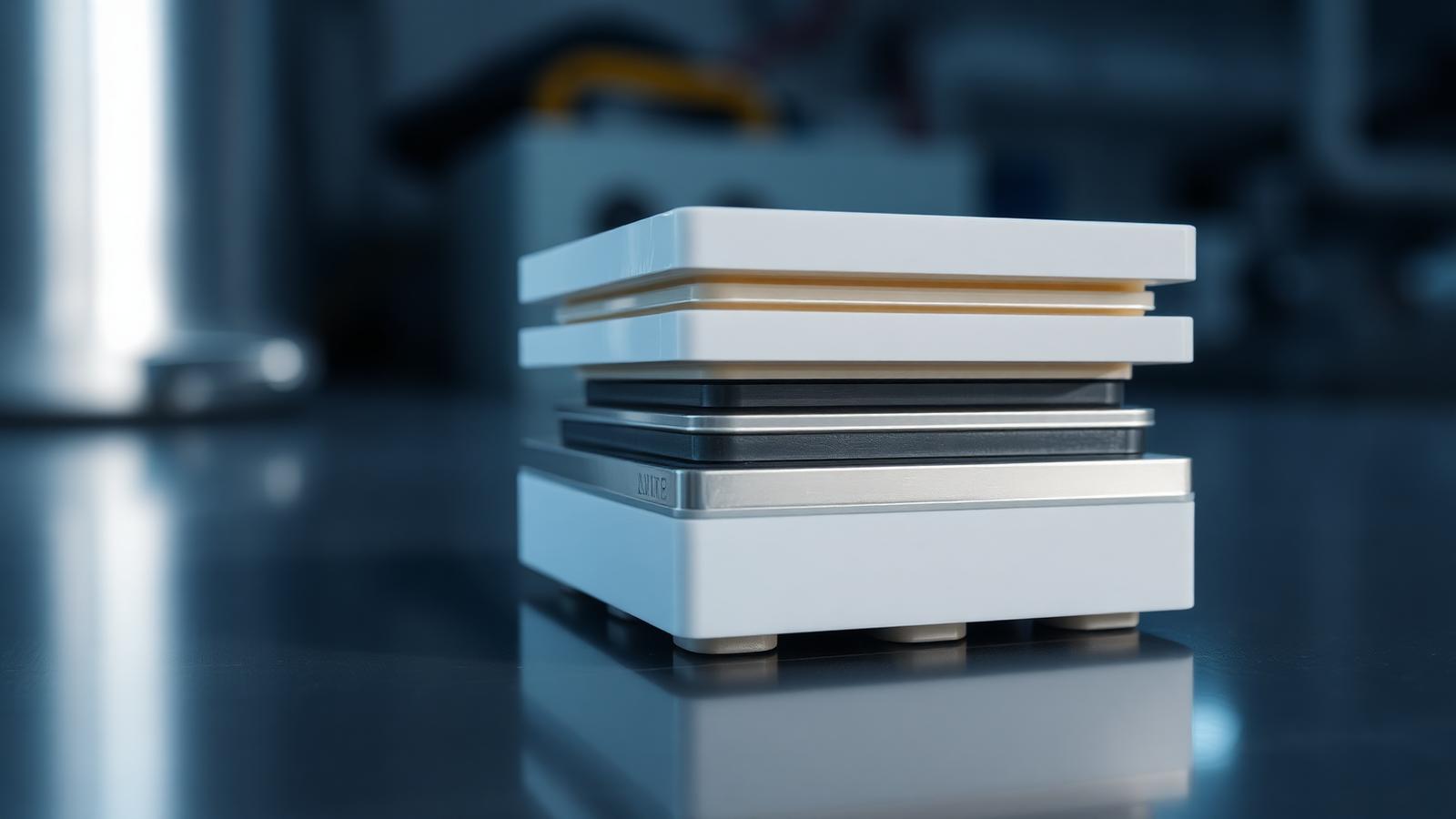
Key points
- Lithium metal anodes offer superior capacity but are prone to forming dendrites, which are microscopic needles that pierce solid electrolytes and cause short circuits during charging cycles.
- The interface between solid components suffers from high resistance because ions struggle to move across rigid surfaces that lack the uniform contact provided by traditional liquid electrolytes.
- Maintaining the physical integrity of the battery stack requires significant external pressure to prevent gaps forming as the anode expands and contracts during electrochemical operation.
- Scaling production remains difficult because the brittle nature of ceramic electrolytes makes them susceptible to cracking under the mechanical stresses of high-speed industrial manufacturing processes.
The standard lithium-ion battery has reached a point of diminishing returns. Since its commercialisation in the early 1990s, the energy density of these cells has increased roughly fourfold, primarily through incremental improvements in electrode chemistry and the thinning of inactive components. However, the fundamental architecture remains unchanged. It relies on a porous plastic separator soaked in a flammable liquid electrolyte, which facilitates the movement of lithium ions between the anode and cathode. This liquid medium is the primary bottleneck for further increases in energy density and the principal cause of thermal runaway in damaged cells.
Transitioning to a solid-state architecture replaces this liquid electrolyte with a dense, solid material, typically a ceramic or a polymer. The theoretical appeal is straightforward. By eliminating the volatile liquid, engineers can theoretically use a pure lithium metal anode, which offers a significantly higher specific capacity than the graphite anodes used today. A solid-state cell could, in principle, store twice as much energy by volume as current technologies while occupying a smaller physical footprint.
Despite these advantages, the timeline for commercial deployment continues to shift. While laboratory-scale prototypes demonstrate high performance, the transition to mass production remains obstructed by fundamental materials science challenges. The difficulty lies not in the storage of energy, but in the mechanical and electrochemical stresses that occur when ions attempt to cross a rigid, solid-to-solid interface. What was once viewed as a manufacturing hurdle is now recognised as a series of complex physical interactions that occur at the atomic level.
The electrochemical limits of liquid electrolytes
To understand why the industry is moving toward solids, one must first identify the ceiling imposed by liquids. In a conventional cell, the liquid electrolyte serves as a transport medium. It permeates the microscopic pores of the electrodes, ensuring a large surface area for ions to move into and out of the active materials. However, these liquids are chemically unstable when in contact with high-voltage cathodes or pure lithium anodes. They decompose over time, forming a layer known as the solid-electrolyte interphase. While this layer protects the electrolyte from further degradation, it also consumes lithium and increases internal resistance.
Furthermore, the liquid electrolyte dictates the thermal limits of the battery. If a cell is punctured or overheated, the organic solvents within the electrolyte can reach their flash point. This leads to a self-sustaining exothermic reaction. To mitigate this, manufacturers must include heavy cooling systems and reinforced casings, which detract from the overall energy density of the battery pack. The liquid also necessitates the use of a graphite anode. If lithium metal were used with a liquid electrolyte, the metal would plate unevenly during charging, forming mossy structures that eventually cause a short circuit.
The electrochemical window of most liquid electrolytes is also limited to about 4.3 volts. Attempting to run a cell at higher voltages to extract more energy results in the oxidation of the electrolyte. Solid materials, particularly certain oxides and sulphides, possess wider electrochemical windows. They remain stable at higher potentials, which allows for the use of high-voltage cathode materials that are incompatible with current liquid systems.
Mechanics of the solid-state ion pathway
A solid-state electrolyte must perform two contradictory roles. It must act as a perfect insulator for electrons to prevent internal discharge, while remaining highly conductive for lithium ions. In a liquid, ions move through a process of diffusion and migration within a fluid. In a solid, the ions must hop between vacant sites within a crystal lattice or move through amorphous channels in a polymer chain.
The most promising materials are currently divided into three categories: sulphides, oxides, and polymers. Sulphide-based electrolytes, such as lithium phosphorus sulphur chloride, offer ionic conductivities that rival or even exceed those of liquid electrolytes at room temperature. They are relatively soft, which allows them to be pressed into contact with the electrodes. However, they are highly reactive to atmospheric moisture, producing toxic hydrogen sulphide gas if the cell casing is breached.
Oxide-based electrolytes, such as garnet-type structures, are chemically stable and mechanically robust. They are also non-flammable and can withstand high temperatures. The trade-off is their extreme brittleness. Unlike sulphides, oxides require high-temperature sintering to create a continuous pathway for ions. This heat can damage the sensitive cathode materials, making the manufacturing process significantly more expensive and complex. Polymers are the easiest to process, as they can be rolled out like thin plastic sheets, but they generally require heating to roughly 60 degrees Celsius before the ions can move freely enough to power a vehicle.
The stubborn persistence of lithium dendrites
Early proponents of solid-state batteries suggested that a hard ceramic separator would physically block the growth of lithium dendrites. Dendrites are microscopic, needle-like structures of lithium metal that grow from the anode during charging. In liquid batteries, these needles eventually pierce the plastic separator, causing a catastrophic short circuit. The industry once assumed that a dense, rigid solid would act as an impenetrable wall.
Research over the last five years has shown this assumption to be incorrect. Dendrites do not just push through the separator; they can grow through the grain boundaries and microscopic cracks within the solid electrolyte itself. When lithium ions are plated onto the anode, they tend to accumulate at points of high stress or surface defects. Even a ceramic that is significantly harder than lithium metal can be fractured by the pressure exerted at the tip of a growing dendrite.
Once a crack begins to form, lithium metal can be deposited directly into the void. The growth is driven by the electric field, which concentrates at the tip of the metal protrusion. This creates a feedback loop where the dendrite grows faster as it approaches the cathode. To prevent this, engineers must apply significant stack pressure to the battery, often reaching several megapascals. This pressure helps to keep the interfaces in contact and closes microscopic voids, but it adds considerable weight and complexity to the final battery pack design. The exact pressure required to suppress dendrite growth without crushing the delicate components of the cell remains a subject of active research and varies significantly between material systems.
Interfacial resistance at the solid-to-solid boundary
The most significant hurdle to a commercial solid-state battery is the interface between the electrolyte and the electrodes. In a liquid system, the fluid flows into every crevice, ensuring perfect contact. In a solid-state system, two hard surfaces are pressed together. At a microscopic level, these surfaces are never perfectly flat. The actual area of contact may only be a fraction of the total surface area, creating high resistance points where ions struggle to cross.
As the battery cycles, the problem worsens. Lithium-ion batteries function by intercalating ions into the electrode structure. This causes the electrodes to expand when charging and contract when discharging. In a liquid-based cell, the electrolyte simply flows to accommodate this volume change. In a solid-state cell, the rigid electrolyte cannot deform. As the anode and cathode swell and shrink, they can pull away from the solid electrolyte, creating gaps.
These gaps lead to a loss of capacity and an increase in internal resistance, which manifests as slower charging speeds and reduced power output. To maintain contact, manufacturers must engineer interfacial layers or coatings that can bridge the gap between the rigid components. Some researchers are exploring "hybrid" designs that use a small amount of liquid or gel at the interface to ensure contact, though this reintroduces some of the safety and stability concerns that solid-state batteries were intended to solve. The challenge is to create a dry interface that is both chemically stable and mechanically flexible enough to survive thousands of expansion and contraction cycles.
Volume changes and the problem of stack pressure
The mechanical stress caused by the expansion of electrodes is not merely a surface contact issue. In a conventional lithium-ion battery, the liquid electrolyte flows to accommodate the slight swelling of the anode during charging. A solid-state battery lacks this fluid buffer. When lithium ions move into the anode, the material expands. Without a liquid to displace, this expansion exerts immense physical pressure on the entire battery assembly. If this pressure is not managed, the ceramic electrolyte layers can crack, or the outer casing of the battery can rupture.
To mitigate this, engineers must apply significant external force to the battery cells, a requirement known as stack pressure. By physically squeezing the layers together using heavy-duty external clamps or spring-loaded housings, manufacturers attempt to maintain the intimate contact necessary for ion transport. Current experimental solid-state cells often require pressures ranging from 5 to 20 megapascals to function effectively. For context, 10 megapascals is roughly equivalent to one hundred times atmospheric pressure.
This requirement introduces a weight and volume penalty that complicates the supposed energy density advantages of solid-state technology. If a battery pack requires heavy steel bracing to keep the cells under pressure, the net energy density of the entire pack may fall below that of a standard liquid-electrolyte pack which requires no such support. Furthermore, maintaining uniform pressure across a large-format cell is difficult. Any local variation in pressure can lead to uneven current distribution, which accelerates the formation of lithium dendrites—microscopic, needle-like structures that can pierce the separator and cause a short circuit.
Thermal stability and the reality of safety margins
The primary appeal of solid-state batteries is the elimination of flammable organic solvents. In a standard battery, the liquid electrolyte can ignite if the cell is punctured or overheated, leading to a self-sustaining fire known as thermal runaway. Solid electrolytes, particularly ceramics, are inherently non-flammable and can theoretically operate at much higher temperatures without decomposing. This suggests that vehicles could dispense with the heavy and complex cooling systems currently required to keep lithium-ion packs within a narrow temperature range.
However, the safety profile is more nuanced than a simple transition from flammable to non-flammable. While the electrolyte itself may not catch fire, the energy stored within the electrodes remains high. If an internal short circuit occurs due to a dendrite penetration, the stored electrochemical energy is released as heat. Even if the electrolyte does not burn, the temperatures reached can be high enough to melt the lithium metal or cause the cathode materials to release oxygen, which can then react with other cell components.
The elimination of liquid fuel reduces the likelihood of a sustained blaze, but it does not remove the thermal risks inherent to high-energy density storage.
Experimental data on the safety of large-scale solid-state cells is currently limited. Most safety tests have been conducted on small, single-layer pouch cells in laboratory settings. Whether these results scale to a full vehicle pack, where hundreds of cells are packed together, remains an open question. There is also the issue of thermal expansion coefficients. If the various solid layers in a cell expand at different rates when heated, the resulting internal shear forces could cause the brittle ceramic separator to shatter, leading to immediate failure.
Materials science of ceramic versus polymer separators
The search for the ideal solid electrolyte has split the field into two primary camps: inorganic ceramics and organic polymers. Ceramic electrolytes, such as sulphides or oxides, offer high ionic conductivity, sometimes matching or exceeding that of liquid electrolytes. Sulphide-based ceramics are particularly promising because they are relatively soft, allowing them to be pressed into contact with electrodes more easily. However, they are highly sensitive to moisture; exposure to even trace amounts of humidity can produce toxic hydrogen sulphide gas.
Oxide-based ceramics are more chemically stable and mechanically robust, but they are extremely brittle. This brittleness makes them difficult to manufacture in the thin, large-area sheets required for automotive batteries. They also require very high sintering temperatures, often exceeding 1,000 degrees Celsius, to fuse the ceramic particles into a continuous, ion-conducting path. These high temperatures can damage the other materials in the battery if the electrolyte is processed in situ.
Polymer electrolytes, usually based on polyethylene oxide, are easier to manufacture using existing roll-to-roll processes. They are flexible and can accommodate the volume changes of the electrodes without cracking. The trade-off is their low ionic conductivity at room temperature. Most polymer-based solid-state batteries must be heated to between 60 and 80 degrees Celsius to function, which consumes energy and complicates the system design. Some researchers are developing composite electrolytes that attempt to combine the conductivity of ceramics with the flexibility of polymers, but these materials often suffer from high resistance at the boundaries where the two different substances meet.
Manufacturing hurdles in vacuum and cleanroom environments
Transitioning from a laboratory bench to a high-volume production line represents the most significant hurdle for solid-state technology. Modern lithium-ion manufacturing is a highly refined process involving the coating of metal foils with a slurry of active material, followed by drying and winding. Solid-state batteries require entirely different techniques. Because many solid electrolytes, especially sulphides, are sensitive to air, entire factories might need to be filled with high-purity argon or extremely dry air. The cost of maintaining such environments at scale is prohibitive.
The deposition of the solid electrolyte layer itself is a point of contention. To compete with liquid cells, the solid separator must be incredibly thin—roughly 20 micrometres or less. Creating a ceramic layer this thin that is also free of microscopic defects is a significant engineering feat. Methods such as physical vapour deposition or pulsed laser deposition work well in a lab but are too slow and expensive for mass production. Standard powder-pressing techniques often result in tiny voids or grain boundaries that act as highways for dendrite growth.
Assembly also poses a problem. In a liquid cell, the electrolyte is injected at the end, and it naturally seeps into every pore of the electrode. In a solid-state cell, every layer must be perfectly stacked and bonded. Any dust particle or surface imperfection between layers can create a high-resistance hot spot. This necessitates a level of cleanroom precision that exceeds current battery manufacturing standards, moving closer to the requirements of semiconductor fabrication.
Projected timelines and the gap between lab and road
Public announcements regarding solid-state batteries often conflate different levels of technology readiness. While several companies have demonstrated working prototypes, these are frequently small cells with limited cycle lives or cells that only function under extreme pressures and specific temperatures. The transition to an automotive-grade product requires thousands of cycles of reliability across a wide range of environmental conditions, from sub-zero winters to desert heat.
Current industry consensus among independent analysts suggests that limited production of vehicles with solid-state batteries might begin in the late 2020s, but these will likely be high-end, low-volume models. The infrastructure for mass-market adoption does not yet exist. It took approximately thirty years for conventional lithium-ion batteries to reach their current state of maturity and cost-effectiveness. Solid-state technology is attempting to compress this timeline while simultaneously moving toward more difficult material requirements.
Most stated timelines for mass adoption fail to account for the years of rigorous safety and durability testing required by automotive regulators.
A significant factor in the slipping timelines is the continuous improvement of existing lithium-ion technology. As standard batteries become cheaper and slightly more energy-dense through the use of silicon-anode blends, the "break-even" point for solid-state batteries moves further away. To be commercially viable, solid-state cells must not only work but must offer a clear advantage in cost-per-kilowatt-hour or charging speed that justifies the massive investment in new manufacturing facilities.
What is established is that solid electrolytes can successfully transport lithium ions and can, in principle, allow for the use of high-capacity lithium-metal anodes. It is also certain that these materials offer a higher threshold for thermal ignition than current liquid electrolytes. What remains contested is whether the mechanical stresses of electrode expansion can be managed without heavy external hardware, and whether any solid electrolyte can be manufactured at scale without prohibitive defect rates.
The picture would change significantly if a material were discovered that possessed the ionic conductivity of a sulphide ceramic but the air-stability and flexibility of a polymer. Alternatively, a breakthrough in "anode-free" architecture, where the lithium plating is managed perfectly on a current collector during the first charge, could eliminate the need for thick, pre-manufactured anodes and simplify production. Until then, the technology remains a series of difficult trade-offs between theoretical performance and practical manufacturing. The transition to solid-state is not a single event but a gradual migration that is currently stalled at the interface of materials science and mechanical engineering.