ComputingThe Post-Silicon Era: What Actually Comes After Moore's LawComputingQuantum Error Correction: The Only Number That MattersEnergyFusion Energy After Ignition: The Engineering Problems That RemainEnergySolid-State Batteries: Where the Engineering Actually StandsNeurotechnologyBrain-Computer Interfaces: What Electrodes Can and Cannot ReadBiotechnologyProtein Structure Prediction After AlphaFold: What Was Solved and What Was NotArtificial IntelligenceInside a Language Model: Attention, Tokens, and Why It HallucinatesEnergyGrid-Scale Storage: The Physics and Economics of Keeping the Lights OnBiotechnologyGene Editing Reaches the Clinic: From CRISPR Scissors to Base EditorsComputingNeuromorphic Computing: Chips That Compute Like Nervous SystemsBiotechnologyThe mRNA Platform Beyond VaccinesSpaceThe Crowded Sky: Orbital Debris and the Economics of Low Earth OrbitEnergySmall Modular Reactors: Serial Production Versus Nuclear PhysicsArtificial IntelligenceWhat Alignment Researchers Actually Do All DaySpaceThe Cislunar Economy: What Would Have to Be TrueBiotechnologyThe Delivery Problem: Why Gene Therapy Stalls Outside the LiverComputingPhotonic Computing: Light as a Substrate for ArithmeticEnergyEnhanced Geothermal: Drilling Toward Firm Clean PowerNeurotechnologyBrain Organoids: Miniature Neural Tissue and the Questions It RaisesArtificial IntelligenceScaling Laws: The Empirical Backbone of Modern AISpaceSpace-Based Solar Power: Running the Numbers HonestlyBiotechnologyEngineered Microbes as FactoriesComputingExtreme Ultraviolet Lithography: The Hardest Machine Ever CommercialisedEnergyHydrogen: Sorting the Real Applications From the HypeNeurotechnologyDeep Brain Stimulation: Neurology's Most Successful ImplantArtificial IntelligenceWhy Robots Still Cannot Reliably Pick Things UpSpaceReading Alien Atmospheres: How Transmission Spectroscopy WorksEnergyCarbon Removal: The Measurement Problem Behind the MarketComputingPost-Quantum Cryptography: Migrating Before the DeadlineBiotechnologyThe Biology of Aging: From Hallmarks to InterventionsEnergyPrivate Fusion: Six Confinement Bets and What Distinguishes ThemArtificial IntelligenceMachine Vision in Clinical MedicineSpaceAsteroid Resources: Chemistry, Not TreasureNeurotechnologyRestoring Movement After Spinal Cord InjuryEnergyThe Power Bill of Artificial IntelligenceBiotechnologyThe Microbiome: Separating Correlation From CauseComputingRunning Models on Devices: The Edge Inference StackSpaceRadiation Is the Hardest Part of Going to MarsNeurotechnologyWhat Neuroscience Now Knows About SleepArtificial IntelligenceOpen-Weight Models and the Economics of Frontier AIComputingThe Post-Silicon Era: What Actually Comes After Moore's LawComputingQuantum Error Correction: The Only Number That MattersEnergyFusion Energy After Ignition: The Engineering Problems That RemainEnergySolid-State Batteries: Where the Engineering Actually StandsNeurotechnologyBrain-Computer Interfaces: What Electrodes Can and Cannot ReadBiotechnologyProtein Structure Prediction After AlphaFold: What Was Solved and What Was NotArtificial IntelligenceInside a Language Model: Attention, Tokens, and Why It HallucinatesEnergyGrid-Scale Storage: The Physics and Economics of Keeping the Lights OnBiotechnologyGene Editing Reaches the Clinic: From CRISPR Scissors to Base EditorsComputingNeuromorphic Computing: Chips That Compute Like Nervous SystemsBiotechnologyThe mRNA Platform Beyond VaccinesSpaceThe Crowded Sky: Orbital Debris and the Economics of Low Earth OrbitEnergySmall Modular Reactors: Serial Production Versus Nuclear PhysicsArtificial IntelligenceWhat Alignment Researchers Actually Do All DaySpaceThe Cislunar Economy: What Would Have to Be TrueBiotechnologyThe Delivery Problem: Why Gene Therapy Stalls Outside the LiverComputingPhotonic Computing: Light as a Substrate for ArithmeticEnergyEnhanced Geothermal: Drilling Toward Firm Clean PowerNeurotechnologyBrain Organoids: Miniature Neural Tissue and the Questions It RaisesArtificial IntelligenceScaling Laws: The Empirical Backbone of Modern AISpaceSpace-Based Solar Power: Running the Numbers HonestlyBiotechnologyEngineered Microbes as FactoriesComputingExtreme Ultraviolet Lithography: The Hardest Machine Ever CommercialisedEnergyHydrogen: Sorting the Real Applications From the HypeNeurotechnologyDeep Brain Stimulation: Neurology's Most Successful ImplantArtificial IntelligenceWhy Robots Still Cannot Reliably Pick Things UpSpaceReading Alien Atmospheres: How Transmission Spectroscopy WorksEnergyCarbon Removal: The Measurement Problem Behind the MarketComputingPost-Quantum Cryptography: Migrating Before the DeadlineBiotechnologyThe Biology of Aging: From Hallmarks to InterventionsEnergyPrivate Fusion: Six Confinement Bets and What Distinguishes ThemArtificial IntelligenceMachine Vision in Clinical MedicineSpaceAsteroid Resources: Chemistry, Not TreasureNeurotechnologyRestoring Movement After Spinal Cord InjuryEnergyThe Power Bill of Artificial IntelligenceBiotechnologyThe Microbiome: Separating Correlation From CauseComputingRunning Models on Devices: The Edge Inference StackSpaceRadiation Is the Hardest Part of Going to MarsNeurotechnologyWhat Neuroscience Now Knows About SleepArtificial IntelligenceOpen-Weight Models and the Economics of Frontier AI

Archive

40 original long-form articles, each written and edited in-house. More are published every week.

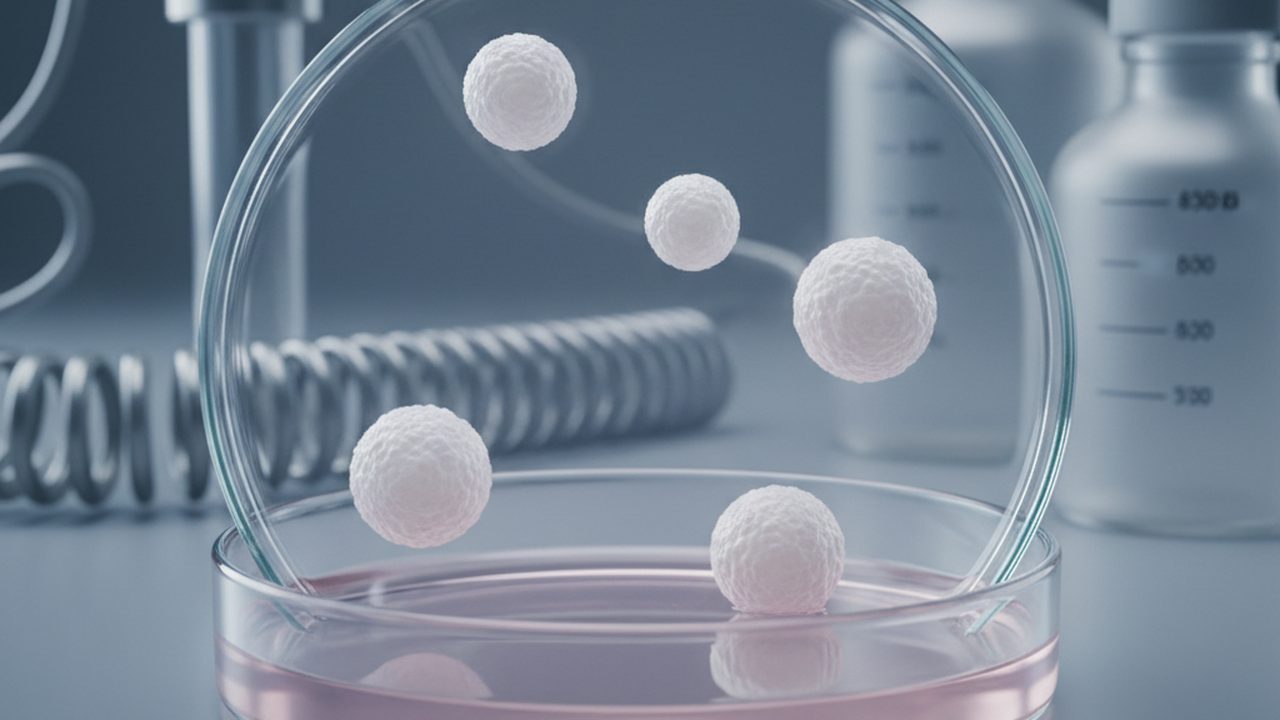
A close-up of a glass petri dish containing several small, translucent white spheres submerged in a clear pinkish growth medium.
Neurotechnology

Brain Organoids: Miniature Neural Tissue and the Questions It Raises

Scientists grow simplified clusters of human neural tissue from stem cells to study brain development. These organoids provide biological insights while raising difficult questions regarding the future potential for sensory perception and consciousness.

Jul 9, 2026 · 13 min · 2,882 words

A macro photograph of a thin, multi-contact electrode lead resting on a sterile grey surface under clinical lighting.
Neurotechnology

Deep Brain Stimulation: Neurology's Most Successful Implant

Deep brain stimulation uses high-frequency electrical pulses to stabilise neural circuits. This feature examines the shift from constant stimulation to adaptive systems that respond to real-time neurological signals.

Jun 21, 2026 · 14 min · 3,045 words

A close-up photograph of a small, flexible electrode array designed for surgical implantation alongside human spinal tissue.
Neurotechnology

Restoring Movement After Spinal Cord Injury

Recent advances in spinal cord research focus on epidural electrical stimulation and brain-spine interfaces to re-establish neural pathways between the brain and lower limbs.

May 25, 2026 · 13 min · 2,961 words

A high-resolution scientific display showing a cross-section of cerebral vasculature and fluid movement in a monochromatic blue palette.
Neurotechnology

What Neuroscience Now Knows About Sleep

Recent advances in neuroimaging reveal how the brain employs a dedicated waste-clearance system and synchronised neural firing to maintain cognitive function and long-term health.

May 10, 2026 · 13 min · 2,849 words